Blog - IT Techcited Ltd

Email

it@techcitedltd.co.uk

Call Us

+447903151528 | 0116 471 0847

Flutter vs React Native: Which Is Better for Your Mobile App in 2026?

Flutter vs React Native

If you are planning to build a mobile application for your business in 2026, one of the first — and most important — decisions you will make is which development framework Flutter vs React Native to use. For the majority of business app projects, the choice comes down to two leading cross-platform options: Flutter and React Native.

Both frameworks allow you to build apps that run on both iOS and Android from a single codebase — dramatically reducing development time and cost compared to building native apps separately for each platform. But they differ significantly in their architecture, performance characteristics, ecosystem maturity, and ideal use cases.
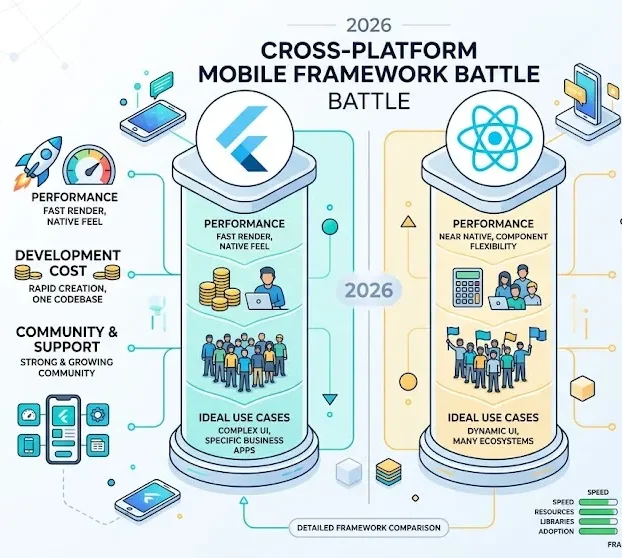
Flutter vs React Native

Flutter: Google’s Fast-Growing Framework

Flutter was created by Google and uses the Dart programming language. Rather than relying on native UI components, Flutter renders its own widgets — which means the app looks and behaves consistently across platforms, including iOS, Android, web, and desktop. This rendering approach also delivers excellent performance, with smooth 60fps animations even on lower-end devices.

Flutter’s widget library is extensive and beautifully designed, enabling high-quality UI development with relatively little custom work. The framework has seen explosive growth in adoption since 2021 and now has one of the largest and most active developer communities in mobile development.

React Native: Meta’s Battle-Tested Framework

React Native was created by Meta (Facebook) and uses JavaScript — the world’s most widely used programming language. Rather than rendering custom widgets, React Native bridges to native UI components, which means apps built with it look and feel native on each platform.

React Native’s primary advantage is its enormous JavaScript/React developer community and ecosystem. If your business already has web developers working in React, their skills transfer directly to React Native, reducing onboarding costs and expanding your available talent pool significantly.

Head-to-Head Comparison

Performance

Flutter generally has the edge on raw performance and animation smoothness, particularly for graphics-intensive applications. React Native’s JavaScript bridge can introduce occasional performance overhead, though the recently introduced New Architecture (JSI) has significantly narrowed this gap.

UI Consistency vs Native Feel

Flutter provides pixel-perfect consistency across platforms. React Native provides more native platform feel — iOS apps look iOS-native, Android apps look Android-native. The right choice depends on your brand and UX priorities.

Development Speed and Cost

Both frameworks offer significant cost savings over native development. Flutter is often slightly faster for green-field projects due to its comprehensive widget library. React Native has an advantage when your team already has React experience.

Ecosystem and Community

React Native’s JavaScript ecosystem is larger and more mature. Flutter’s ecosystem is growing rapidly and now has excellent coverage for most common mobile app requirements.

Which Should Your Business Choose?

Choose Flutter if: you are building a visually rich, performance-critical application; you do not have existing JavaScript/React expertise; or you want the most consistent cross-platform UI experience. Choose React Native if: your team already uses React; your app needs to feel truly native on each platform; or you want access to the largest available developer talent pool.

Techcited Ltd’s Mobile App Development Expertise

Techcited Ltd specialises in Flutter mobile app development, delivering high-quality, performant iOS and Android applications for businesses across the UK. Our experienced Flutter team has delivered apps across sectors including retail, healthcare, professional services, and logistics.

Frequently Asked Questions

Q: Can a Flutter or React Native app match the performance of a native app?

A: For the vast majority of business application use cases — forms, data display, user authentication, notifications, payments — yes. Only highly performance-critical applications such as advanced graphics, real-time gaming, or heavy device sensor integration might require truly native development.

Q: How much does it cost to build a mobile app in the UK in 2026?

A: A straightforward business app with standard features (user authentication, data display, push notifications) typically costs £15,000–£40,000 depending on complexity. Contact Techcited Ltd for a specific estimate based on your requirements.

Q: Does Techcited Ltd publish both iOS and Android versions of apps built with Flutter?

A: Yes. Flutter builds to both iOS (App Store) and Android (Google Play) from a single codebase. We manage the submission and publication process for both platforms as part of our app development service.

Ready to get started?

Thinking about building a mobile app for your business? Techcited Ltd’s Flutter development team is ready to help. Book a free project consultation today. Visit: it.techcitedltd.co.uk


How Much Does It Cost to Build a Website in the UK in 2026? A Realistic Guide

How-Much-Does-It-Cost-to-Build-a-Website-in-the-UK-in-2026

One of the first questions any business owner asks when considering a new website is: how much is this going to cost? It is a completely reasonable question — but one that is genuinely difficult to answer without understanding the enormous range of websites that exist and the factors that determine their price.

How-Much-Does-It-Cost-to-Build-a-Website-in-the-UK-in-2026


In this guide, we break down the realistic cost of building different types of websites in the UK in 2026, explain what drives those costs, and help you understand what you should expect to receive at each investment level.

Why Website Costs Vary So Dramatically

A website can cost anywhere from £500 to £500,000+ depending on its complexity, functionality, design quality, and the type of supplier you choose. This range reflects the vast spectrum of what constitutes a ‘website’ — from a simple five-page brochure site to a complex, API-integrated eCommerce platform serving thousands of products to millions of customers.

The primary cost drivers are: the number of pages and the complexity of the content, whether bespoke design or a template is used, the specific functionality required (booking systems, payment processing, member areas, API integrations), the ongoing support and maintenance arrangement, and the experience and location of the development team.

UK Website Cost Breakdown by Type

Basic Brochure Website: £800 – £3,000

A professional 5–8 page brochure website — home, about, services, blog, and contact — built on WordPress using a quality theme with basic customisation. Suitable for sole traders, freelancers, and very small businesses needing an online presence. Typically delivered by a single freelance developer or small local agency.

Professional Small Business Website: £3,000 – £8,000

A professionally designed, custom-built WordPress or React website with tailored design, multiple service pages, contact forms, basic SEO configuration, mobile optimisation, and performance tuning. This range represents the sweet spot for most UK SMEs. Techcited Ltd’s web development projects for small businesses typically fall in this range.

eCommerce Website (Shopify or WooCommerce): £5,000 – £20,000+

An eCommerce website with a product catalogue, shopping cart, payment processing, customer accounts, and basic integrations. Complexity and cost scale with the number of products, the need for inventory integrations, custom checkout flows, and multi-currency or multi-language requirements.

Custom Web Application: £15,000 – £100,000+

A bespoke, database-driven web application — a SaaS platform, a member portal, a booking and scheduling system, or a complex business tool. These projects involve significant back-end development, often with API integrations, authentication systems, and ongoing development sprints. Cost is determined by scope and complexity.

Hidden Costs to Plan For

  • Domain name registration: £10–£30 per year
  • Web hosting: £10–£300 per month depending on specification
  • SSL certificate: often included but confirm with your developer
  • Ongoing maintenance and updates: typically £50–£300 per month for SME sites
  • SEO and digital marketing: budget separately from the build cost
  • Photography and copywriting: often underestimated, essential for quality

Choosing the Right Web Development Partner in Leicester

Techcited Ltd builds professional websites and web applications for businesses across Leicester and the wider UK. We use modern technologies including React, Next.js, WordPress, and Shopify, and every project includes on-page SEO configuration, mobile-first responsive design, and post-launch support.

We provide clear, itemised project quotes with no hidden fees, and our transparent development process keeps you informed and in control at every stage.

Frequently Asked Questions

Q: Should I choose WordPress or a custom-built website for my small business?

A: For most small business websites, WordPress offers an excellent balance of flexibility, cost-effectiveness, and ease of management. Custom-built solutions using React or Next.js are better suited to web applications or sites with highly specific functionality requirements.

Q: How long does it take to build a small business website in the UK?

A: A professional small business website typically takes 4–8 weeks from brief to launch, depending on the complexity, the clarity of the brief, and the speed of content provision. eCommerce sites and web applications take longer.

Q: Does Techcited Ltd provide ongoing website maintenance after launch?

A: Yes. We offer website maintenance and support packages to all clients following launch, covering security updates, performance monitoring, content updates, and technical support.

Ready to get started?

Ready to discuss your website project? Get a free, no-obligation quote from Techcited Ltd. We build professional websites and web applications that deliver real results. Visit: it.techcitedltd.co.uk


Why Your Business Website Needs SEO

Why Your Business Website Needs SEO

Why Your Business Website Needs SEO (And How It’ll Actually Make You Money)

Let’s be honest: you probably already have a website. Maybe you paid someone to build it a few years ago, or perhaps you cobbled it together yourself one weekend. Either way, it’s sitting there online, looking reasonably professional, and… doing absolutely nothing.

Sound familiar?

Here’s the uncomfortable truth: having a website in 2026 is like having a shop on a street where nobody walks past. Sure, it exists. But if customers can’t find it, what’s the point?

This is especially true for small and medium businesses across the UK. You’re competing against bigger brands with bigger budgets, and you need every advantage you can get. The good news? You don’t need a massive marketing budget. You just need SEO.

Why Your Business Website Needs SEO

What Even Is SEO? 

SEO stands for Search Engine Optimisation, but forget the technical term for a second.

Think of it this way: when someone in your area googles “plumber near me” or “best accountant in Manchester,” do they find you? Or do they find your competitor?

SEO is simply making sure Google knows your website exists, understands what you do, and shows it to people who are actively looking for your services.

It involves things like:

  • Making your website load quickly (because nobody waits around anymore)
  • Ensuring it works perfectly on mobile phones
  • Using the right words that your customers actually search for
  • Creating helpful content that answers real questions
  • Having a clear, easy-to-navigate site structure

When done properly, SEO gets your business onto the first page of Google. And let’s face it, when was the last time you scrolled to page two?

Why Should You Actually Care About SEO?

Your Customers Are Already Searching

Right now, someone in your town is typing into Google exactly what you offer. Maybe it’s “emergency electrician in Birmingham” or “affordable web designer in London.”

If you’re not showing up in those results, guess what? Your competitor is. And they’re getting the phone call, the email, the sale.

Before anyone buys anything these days, they Google it. Your potential customers are out there searching. The question is: can they find you?

It’s Free Traffic That Never Stops

Here’s where SEO gets really interesting.

With paid advertising, the moment you stop paying, the traffic stops. Turn off your Facebook ads? Silence. Stop your Google Ads? Nothing.

But SEO? It keeps working. Rank well for the right keywords, and you’ll get a steady stream of visitors month after month, without paying for every single click.

For small businesses watching every penny, that return on investment is massive.

People Trust Google’s Top Results

There’s something psychological about Google’s rankings. When your business appears at the top, customers automatically assume you’re established, professional, credible.

Meanwhile, if they can’t find you at all, there’s a nagging doubt: “Are they even a real business?”

Your website’s ranking directly affects how much people trust you, even before they’ve visited your site.

You Can Actually Beat the Big Players

Think you can’t compete with national chains or massive corporations? Think again.

With local SEO, a small cleaning company in Leeds can outrank a huge national brand for “cleaning services in Leeds.” Why? Because Google prioritises local, relevant results for local searches.

You don’t need to beat everyone. You just need to show up for the customers in your area who are ready to buy.

How an SEO-Optimised Website Actually Makes You Money

Let’s get practical. Here’s how this translates into actual revenue for your business.

You Attract People Who Are Ready to Buy

There’s a huge difference between someone scrolling past a random ad on social media and someone typing “emergency electrician near me” into Google at 10pm.

One is passively browsing. The other has a problem that needs solving right now.

SEO targets these high-intent customers. They’re actively searching for what you offer, which means:

  • They’re more likely to contact you
  • They’re more likely to become paying customers
  • You waste less time on leads that go nowhere

Your Website Becomes a Salesperson That Never Sleeps

Your shop closes at 5pm. Your office shuts for the weekend. But your website? It’s open 24/7.

With the right setup, customers can:

  • Browse your services at midnight
  • Read reviews while they’re on the bus
  • Submit enquiry forms on Sunday morning
  • Book appointments or place orders any time they like

An optimised website with clear calls-to-action (like “Call Now” buttons, simple contact forms, or click-to-call options) turns casual browsers into paying customers, even when you’re asleep.

You Spend Less on Marketing Over Time

Traditional advertising is expensive and temporary. A newspaper ad? Gone tomorrow. Leaflets? Straight in the bin. Billboards? Eye-wateringly expensive.

SEO is different. Yes, there’s an upfront investment (either in learning it yourself or hiring someone who knows what they’re doing), but once you’re ranking well, the traffic keeps coming without constant spending.

Plus, unlike traditional advertising, you can track everything. You’ll know exactly where your visitors come from, what they’re looking for, and which pages lead to sales.

Content Marketing Brings in Even More Business

Here’s a trick that works brilliantly: answer your customers’ questions before they even ask.

Start a blog. Write guides. Create FAQs. For example:

  • “How much does rewiring a house cost in the UK?”
  • “What should I look for in a local accountant?”
  • “How often should I get my boiler serviced?”

When you publish helpful content like this, you:

  • Rank for more search terms
  • Position yourself as an expert
  • Build trust with potential customers
  • Attract people at different stages of their buying journey

And helpful content often leads directly to “I like these people, I’ll give them a call.”

A Real-World Example

Let me paint you a picture.

There’s a small cleaning company in Leeds. Nice people, great service, but struggling to get consistent work. They’re relying on word-of-mouth and the occasional paid ad, which eats into their already tight margins.

Then they invest in an SEO-optimised website.

Suddenly, they start appearing on Google for “cleaning services in Leeds,” “office cleaning Leeds,” “domestic cleaners near me.” Within a few months:

  • They’re getting enquiries every single day
  • Customers can book directly through their website
  • They’ve expanded into nearby towns without opening new offices
  • Revenue has doubled, and they’ve hired two more staff

Same business. Same quality of service. But now, instead of chasing customers, customers find them.

That’s the power of SEO.

What Your Website Absolutely Needs

If you’re serious about using your website to grow your business, make sure it has these essentials:

Mobile-friendly design – Most people search on their phones. If your site looks terrible on mobile, you’ve lost them.

Fast loading speed – Aim for under 3 seconds. Slow sites frustrate people, and they’ll click away.

Clear contact information – Make it stupidly easy for people to reach you. Phone number, email, contact form, address if relevant.

Google Business Profile – This is crucial for local SEO. Set it up properly and keep it updated.

Security (SSL certificate) – That little padlock in the address bar. It tells customers your site is safe.

Relevant keywords in your content – Use the actual words your customers search for, naturally woven into your website copy.

A blog or resources section – Fresh, helpful content signals to Google that your site is active and valuable.

Analytics tracking – You need to know what’s working. Set up Google Analytics so you can see where your visitors come from and what they do on your site.

The Bottom Line

An SEO-optimised website isn’t some nice-to-have luxury anymore. For UK small and medium businesses, it’s essential.

It gives you:

  • A constant stream of potential customers
  • Lower marketing costs in the long run
  • Credibility and trust
  • Sustainable growth you can actually scale

The best part? You’re not interrupting people with ads they don’t want to see. Instead, you’re there when they need you, answering the question they’re actively asking.

If you want your business to thrive in 2026 and beyond, investing in a properly optimised website is one of the smartest moves you can make.

Stop being the best-kept secret in your industry. Let your customers find you.


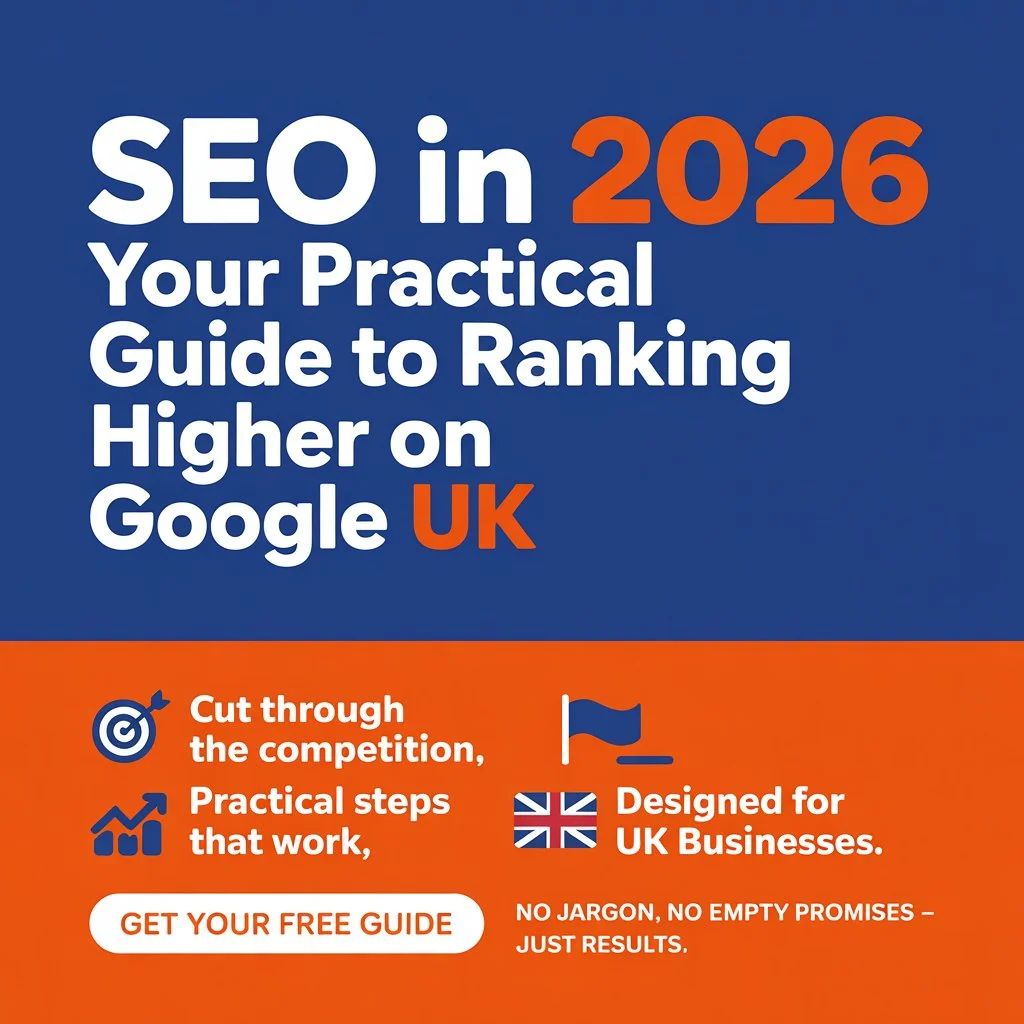
SEO in 2026: Your Practical Guide to Ranking Higher on Google UK

SEO in 2026 Your Practical Guide to Ranking Higher on Google UK

SEO in 2026: Your Practical Guide to Ranking Higher on Google UK


SEO in 2026 Your Practical Guide to Ranking Higher on Google UK

Let’s be honest – getting your business noticed on Google feels harder every year so, SEO in 2026 is also hard. If you’re a small to medium-sized business in the UK, you’re competing not just with local rivals, but with national brands and AI-generated content flooding the internet.

The good news? SEO still works. The even better news? Most of your competitors are still getting it wrong.

After years of helping UK businesses improve their online visibility, I’ve seen what actually moves the needle. This guide cuts through the noise and focuses on what genuinely works in 2026 – no jargon, no empty promises, just practical steps you can take.

What’s Actually Changed in SEO in 2026?

Google’s latest updates have shifted how search works. The Search Generative Experience means you’re now competing with AI-generated summaries at the top of search results. Personalisation has gone deeper, showing different results based on location, search history, and user behaviour.

Here’s what this means for your business: generic, thin content won’t cut it anymore. Google wants to see you actually know what you’re talking about. It wants to see real experience, genuine expertise, and content that helps people solve problems.

Content That Actually Ranks (And Gets You Clients)

I’ll save you the suspense – content quality matters more than anything else in 2026.

But “quality” doesn’t mean longer. It means better. Your content should answer the specific question someone’s asking, drawn from your real-world experience running or working with businesses like theirs.

What works:

  • Writing like you’re explaining something to a colleague over coffee
  • Using examples from actual projects you’ve worked on
  • Including current data and trends (outdated stats kill credibility)
  • Breaking down complex topics into digestible sections
  • Adding your personal take based on what you’ve seen work

What doesn’t work:

  • Keyword-stuffed paragraphs that sound robotic
  • Generic advice anyone could write
  • Copying what’s already ranking
  • AI-generated fluff with no substance

Think about it this way: if someone reads your article and still needs to Google the topic again, you haven’t done your job.

Speed and User Experience: The Silent Ranking Killers

Here’s something most businesses don’t realise until it’s too late – a slow website is costing you rankings every single day.

Google measures how real users experience your site. If pages take more than a couple of seconds to load, if things jump around whilst loading, or if your site’s a nightmare on mobile, you’re fighting an uphill battle regardless of your content quality.

I’ve seen businesses invest thousands in content whilst their website runs on budget hosting that can barely keep up. It’s like putting a Ferrari engine in a car with flat tyres.

Quick wins for better performance:

  • Switch to quality hosting (it’s worth the extra £10-20 per month)
  • Compress your images before uploading
  • Remove plugins or scripts you don’t actually need
  • Ensure your site works perfectly on mobile first, desktop second

Your website speed isn’t just about SEO – slow sites lose customers before they even read your content.

Voice Search: The Opportunity Most Businesses Are Missing

Over 60% of UK households now have smart speakers. People are asking Google questions out loud, and they phrase things differently than they type.

Instead of typing “accountant Leicester,” someone might ask their Google Home, “Who’s a good accountant near me that works with small businesses?”

To capture voice search traffic:

  • Add an FAQ section answering common questions in natural language
  • Use conversational phrases in your content
  • Focus on local, specific queries
  • Provide direct, concise answers early in your content

This is still relatively untapped territory. Get ahead of your competitors by optimising for how people actually talk.

Local SEO for UK Businesses: Your Competitive Advantage

If you’re a local business, this is your secret weapon. Google wants to show local results to local searchers, which means you can outrank bigger national competitors for customers in your area.

The essentials:

  • Keep your Google Business Profile completely up to date (photos, hours, services, reviews)
  • Use location-specific keywords naturally in your content
  • Get listed in legitimate local directories
  • Earn links from other local businesses and organisations
  • Create location pages if you serve multiple areas

One of the biggest mistakes I see is businesses half-committing to local SEO. Your Google Business Profile shouldn’t be set up once and forgotten – it needs regular updates, fresh photos, and consistent engagement with reviews.

Backlinks for SEO in 2026: Quality Over Everything

Backlinks still matter, but the game has changed completely. Google’s got much better at spotting manipulative link building.

Forget about:

  • Buying links from random websites
  • Generic directory submissions
  • Guest posting on low-quality blog networks

Focus on:

  • Building genuine business relationships that lead to natural links
  • Getting featured in local news or business publications
  • Creating content other businesses actually want to reference
  • Partnerships with complementary businesses

Think of backlinks as professional references. You want them from people who matter in your industry, not just anyone willing to mention you.

The Technical Stuff You Can’t Ignore

Technical SEO sounds intimidating, but it’s really about making sure Google can easily understand and access your website.

Check these regularly:

  • Are all your pages loading without errors?
  • Do you have a sitemap submitted to Google?
  • Are your images optimised with descriptive alt text?
  • Is your site structure logical and easy to navigate?
  • Are there broken links you need to fix?

You don’t need to be a technical expert, but you do need someone checking these things regularly. Small technical issues compound over time.

Building Trust: The E-E-A-T Framework

Google evaluates whether it should trust your website based on four factors: Experience, Expertise, Authoritativeness, and Trustworthiness.

How to demonstrate E-E-A-T:

  • Put your name on your content as the author
  • Include an about page showing your qualifications and experience
  • Add case studies from real projects
  • Display client testimonials
  • Show your physical address and contact information
  • Keep your content updated and accurate

This isn’t about gaming the system – it’s about showing you’re a legitimate business with real expertise. The more trust signals you have, the more confident Google feels ranking you higher.

Your Next Steps

SEO in 2026 isn’t about finding shortcuts or the latest hack. It’s about consistently doing the fundamentals well: creating genuinely helpful content, maintaining a fast and user-friendly website, building real authority in your space, and proving you’re trustworthy.

The businesses that win at SEO are the ones that view it as a long-term investment, not a quick fix. It takes time, but the results compound.

If you’re a small to medium business looking to improve your online visibility, the most important thing is to start. Pick one area from this guide and commit to improving it this month. Then move to the next.

At Techcited Ltd, we’ve helped businesses across the UK navigate exactly these challenges. If you’d like support developing your SEO strategy or just want to discuss what might work for your specific situation, get in touch.

Email: consultant@techcitedltd.co.uk
Phone: 07903 151528

We are here to help you grow your business.