 Skip to content
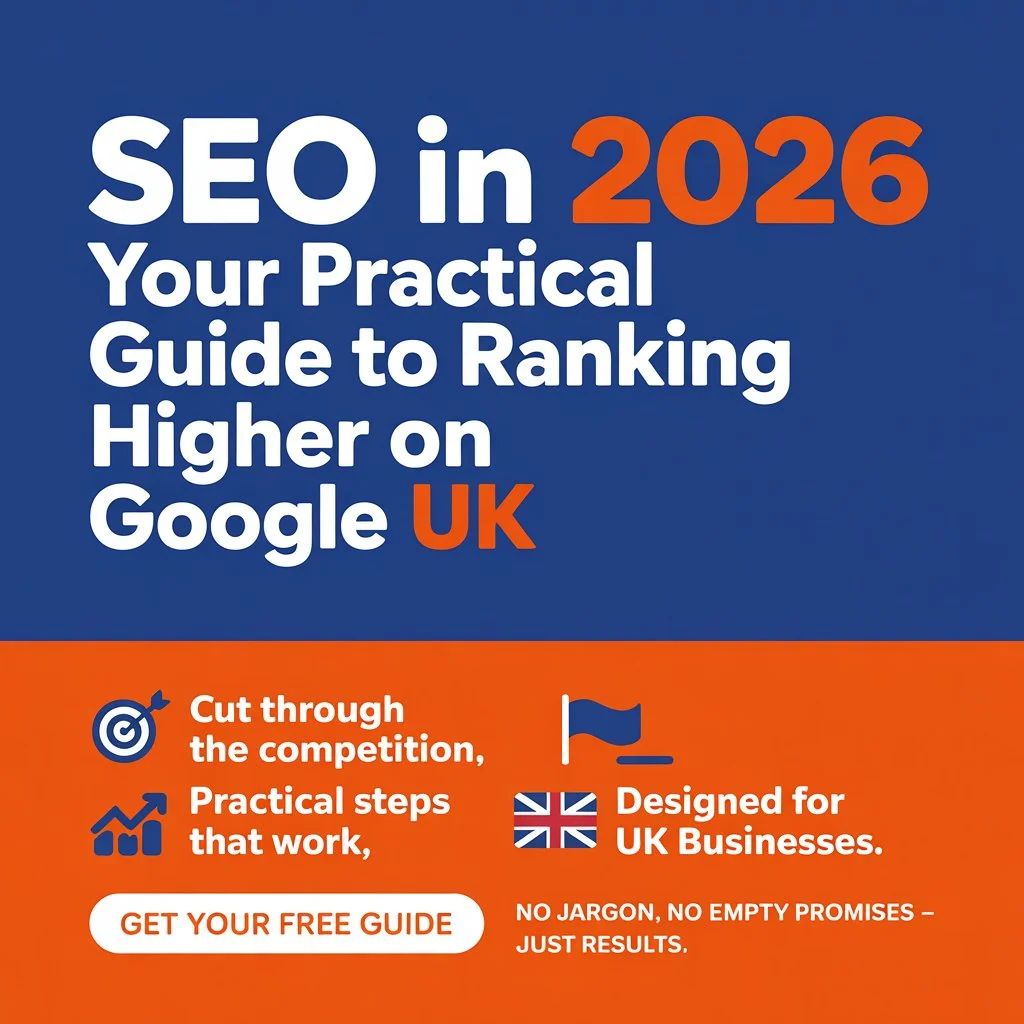
SEO in 2026: Your Practical Guide to Ranking Higher on Google UK
Let’s be honest – getting your business noticed on Google feels harder every year so, SEO in 2026 is also hard. If you’re a small to medium-sized business in the UK, you’re competing not just with local rivals, but with national brands and AI-generated content flooding the internet.
The good news? SEO still works. The even better news? Most of your competitors are still getting it wrong.
After years of helping UK businesses improve their online visibility, I’ve seen what actually moves the needle. This guide cuts through the noise and focuses on what genuinely works in 2026 – no jargon, no empty promises, just practical steps you can take.
What’s Actually Changed in SEO in 2026?
Google’s latest updates have shifted how search works. The Search Generative Experience means you’re now competing with AI-generated summaries at the top of search results. Personalisation has gone deeper, showing different results based on location, search history, and user behaviour.
Here’s what this means for your business: generic, thin content won’t cut it anymore. Google wants to see you actually know what you’re talking about. It wants to see real experience, genuine expertise, and content that helps people solve problems.
Content That Actually Ranks (And Gets You Clients)
I’ll save you the suspense – content quality matters more than anything else in 2026.
But “quality” doesn’t mean longer. It means better. Your content should answer the specific question someone’s asking, drawn from your real-world experience running or working with businesses like theirs.
What works:
- Writing like you’re explaining something to a colleague over coffee
- Using examples from actual projects you’ve worked on
- Including current data and trends (outdated stats kill credibility)
- Breaking down complex topics into digestible sections
- Adding your personal take based on what you’ve seen work
What doesn’t work:
- Keyword-stuffed paragraphs that sound robotic
- Generic advice anyone could write
- Copying what’s already ranking
- AI-generated fluff with no substance
Think about it this way: if someone reads your article and still needs to Google the topic again, you haven’t done your job.
Speed and User Experience: The Silent Ranking Killers
Here’s something most businesses don’t realise until it’s too late – a slow website is costing you rankings every single day.
Google measures how real users experience your site. If pages take more than a couple of seconds to load, if things jump around whilst loading, or if your site’s a nightmare on mobile, you’re fighting an uphill battle regardless of your content quality.
I’ve seen businesses invest thousands in content whilst their website runs on budget hosting that can barely keep up. It’s like putting a Ferrari engine in a car with flat tyres.
Quick wins for better performance:
- Switch to quality hosting (it’s worth the extra £10-20 per month)
- Compress your images before uploading
- Remove plugins or scripts you don’t actually need
- Ensure your site works perfectly on mobile first, desktop second
Your website speed isn’t just about SEO – slow sites lose customers before they even read your content.
Voice Search: The Opportunity Most Businesses Are Missing
Over 60% of UK households now have smart speakers. People are asking Google questions out loud, and they phrase things differently than they type.
Instead of typing “accountant Leicester,” someone might ask their Google Home, “Who’s a good accountant near me that works with small businesses?”
To capture voice search traffic:
- Add an FAQ section answering common questions in natural language
- Use conversational phrases in your content
- Focus on local, specific queries
- Provide direct, concise answers early in your content
This is still relatively untapped territory. Get ahead of your competitors by optimising for how people actually talk.
Local SEO for UK Businesses: Your Competitive Advantage
If you’re a local business, this is your secret weapon. Google wants to show local results to local searchers, which means you can outrank bigger national competitors for customers in your area.
The essentials:
- Keep your Google Business Profile completely up to date (photos, hours, services, reviews)
- Use location-specific keywords naturally in your content
- Get listed in legitimate local directories
- Earn links from other local businesses and organisations
- Create location pages if you serve multiple areas
One of the biggest mistakes I see is businesses half-committing to local SEO. Your Google Business Profile shouldn’t be set up once and forgotten – it needs regular updates, fresh photos, and consistent engagement with reviews.
Backlinks for SEO in 2026: Quality Over Everything
Backlinks still matter, but the game has changed completely. Google’s got much better at spotting manipulative link building.
Forget about:
- Buying links from random websites
- Generic directory submissions
- Guest posting on low-quality blog networks
Focus on:
- Building genuine business relationships that lead to natural links
- Getting featured in local news or business publications
- Creating content other businesses actually want to reference
- Partnerships with complementary businesses
Think of backlinks as professional references. You want them from people who matter in your industry, not just anyone willing to mention you.
The Technical Stuff You Can’t Ignore
Technical SEO sounds intimidating, but it’s really about making sure Google can easily understand and access your website.
Check these regularly:
- Are all your pages loading without errors?
- Do you have a sitemap submitted to Google?
- Are your images optimised with descriptive alt text?
- Is your site structure logical and easy to navigate?
- Are there broken links you need to fix?
You don’t need to be a technical expert, but you do need someone checking these things regularly. Small technical issues compound over time.
Building Trust: The E-E-A-T Framework
Google evaluates whether it should trust your website based on four factors: Experience, Expertise, Authoritativeness, and Trustworthiness.
How to demonstrate E-E-A-T:
- Put your name on your content as the author
- Include an about page showing your qualifications and experience
- Add case studies from real projects
- Display client testimonials
- Show your physical address and contact information
- Keep your content updated and accurate
This isn’t about gaming the system – it’s about showing you’re a legitimate business with real expertise. The more trust signals you have, the more confident Google feels ranking you higher.
Your Next Steps
SEO in 2026 isn’t about finding shortcuts or the latest hack. It’s about consistently doing the fundamentals well: creating genuinely helpful content, maintaining a fast and user-friendly website, building real authority in your space, and proving you’re trustworthy.
The businesses that win at SEO are the ones that view it as a long-term investment, not a quick fix. It takes time, but the results compound.
If you’re a small to medium business looking to improve your online visibility, the most important thing is to start. Pick one area from this guide and commit to improving it this month. Then move to the next.
At Techcited Ltd, we’ve helped businesses across the UK navigate exactly these challenges. If you’d like support developing your SEO strategy or just want to discuss what might work for your specific situation, get in touch.
Email: consultant@techcitedltd.co.uk
Phone: 07903 151528
We are here to help you grow your business.
